How to Create AI Food Commercials in 2026: Cinematic Fried Chicken Ads, Crispy VFX & Professional Production
An in-depth, practical production guide breaking down our independent, KFC-inspired crispy chicken commercial concept. Learn how modern AI video tools, tactile food photography, crispy particle VFX, and professional studio editing produce mouthwatering restaurant advertising that drives real orders.
1. Introduction: Can AI Really Make Food Look This Cinematic?
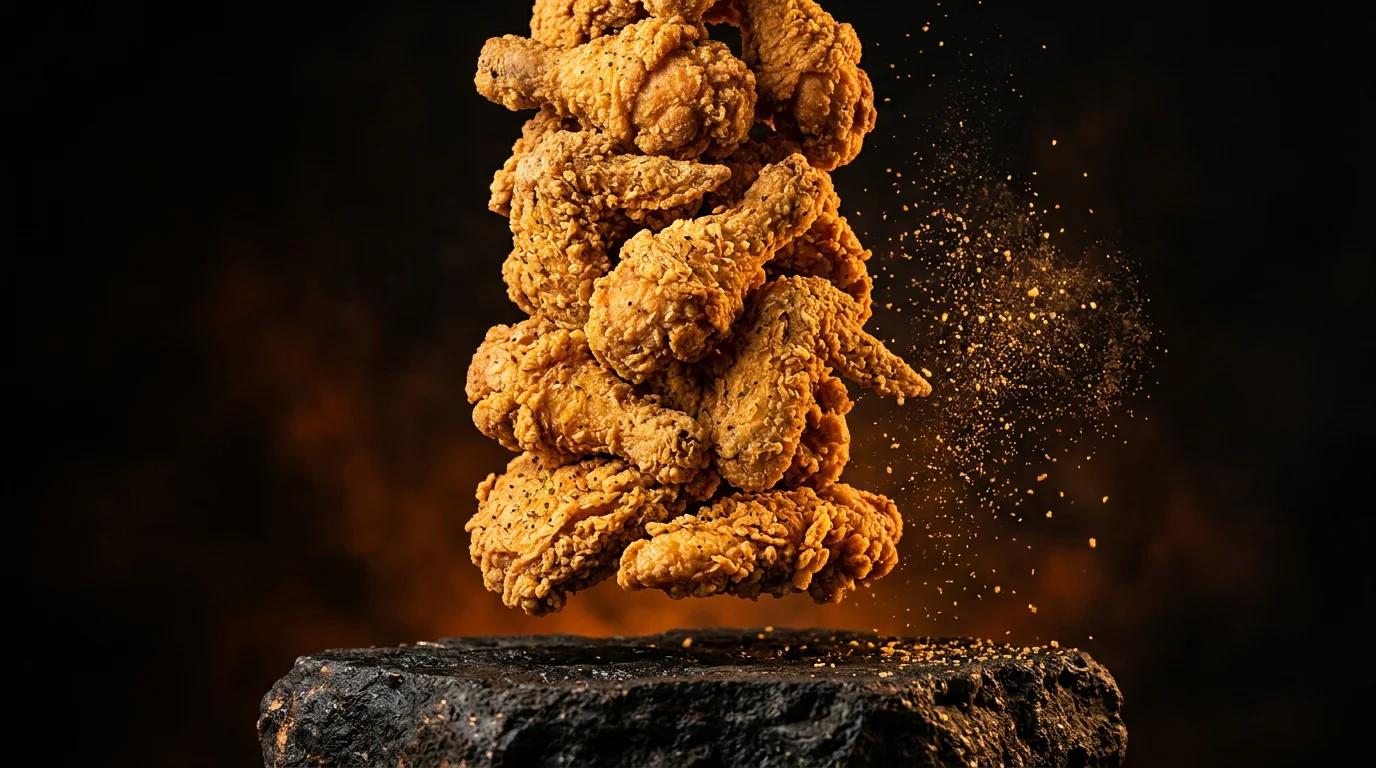
Hear the initial shatter of a golden crust. Watch the micro-droplets of seasoned oil glisten under warm tungsten spotlights. See microscopic crispy breadcrumbs untethering in slow motion against a deep charcoal void.
Food cinematography is historically one of the most punishing and expensive sectors of commercial filmmaking. Traditional high-speed tabletop shoots require specialized motion-control robotic arms (such as the Bolt rig), dedicated food stylists armed with blowtorches and acrylic ice, high-speed Phantom Flex 4K cameras shooting at 1,000 frames per second, and tens of thousands of dollars in studio rental fees.
In 2026, advances in multimodal generative models, spatial latent control, and hybrid VFX compositing have opened a radically new frontier: cinematic AI food commercial production.
To demonstrate what modern AI video pipelines can achieve when guided by seasoned directorial craft, our studio at AI SiteFlow created an independent, high-energy speculative commercial concept titled “100% Crispy.” In this guide, we analyze this concept and teach a repeatable, beginner-to-advanced production workflow that any restaurant, fast-casual chain, or food brand can adapt.
100% Crispy | Cinematic Fried Chicken Commercial
Watch the 30-second speculative commercial below. Rendered natively in 9:16 vertical resolution at 30 FPS. Click to initialize the interactive player.
This is an independent AI-generated creative concept by AI SiteFlow, created solely for portfolio demonstration and educational purposes. It was not commissioned, sponsored, approved, or endorsed by KFC or Yum! Brands. All trademarks, registered logos, and trade dress belong to their respective owners.
AI SiteFlow does not claim any official partnership with KFC or Yum! Brands. This case study demonstrates independent creative production workflows for marketing education.
Looking to elevate your restaurant or food brand with cinema-grade video ads? Explore cinematic AI commercials by AI SiteFlow
2. Why Do Crispy Food Commercials Capture Attention?
Human appetite psychology is deeply hardwired to visual and acoustic textures. When scrolling through a fast-paced social feed, viewers make subconscious eating decisions in less than two seconds based on specific sensory triggers:
Texture & Micro-Irregularities
Smooth surfaces look artificial. Crunchy food appeals because of micro-ridges, jagged crust bubbles, and uneven golden crevices that catch light.
Golden Color & Maillard Warmth
Warm amber hues (#FFAE42) trigger psychological hunger cues, simulating the natural Maillard reaction that occurs during frying.
Slow-Motion Kinetic Release
Decelerating movement allows the brain to savor details: a breadcrumb detaching, a tender breaking, or steam rising gently into the air.
Immediate Sensory Opening Hook
Placing the hero food item in extreme close-up within the first 1.5 seconds stops the swipe before attention drifts.
3. Inside Our KFC-Inspired AI Commercial (Scene Analysis)
To understand how a commercial is engineered, we must examine the actual footage. In our 30-second portfolio video, each sequence was structured around a distinct sensory objective:
| Scene / Beat | What the Viewer Sees | Creative Purpose | Production Challenge |
|---|---|---|---|
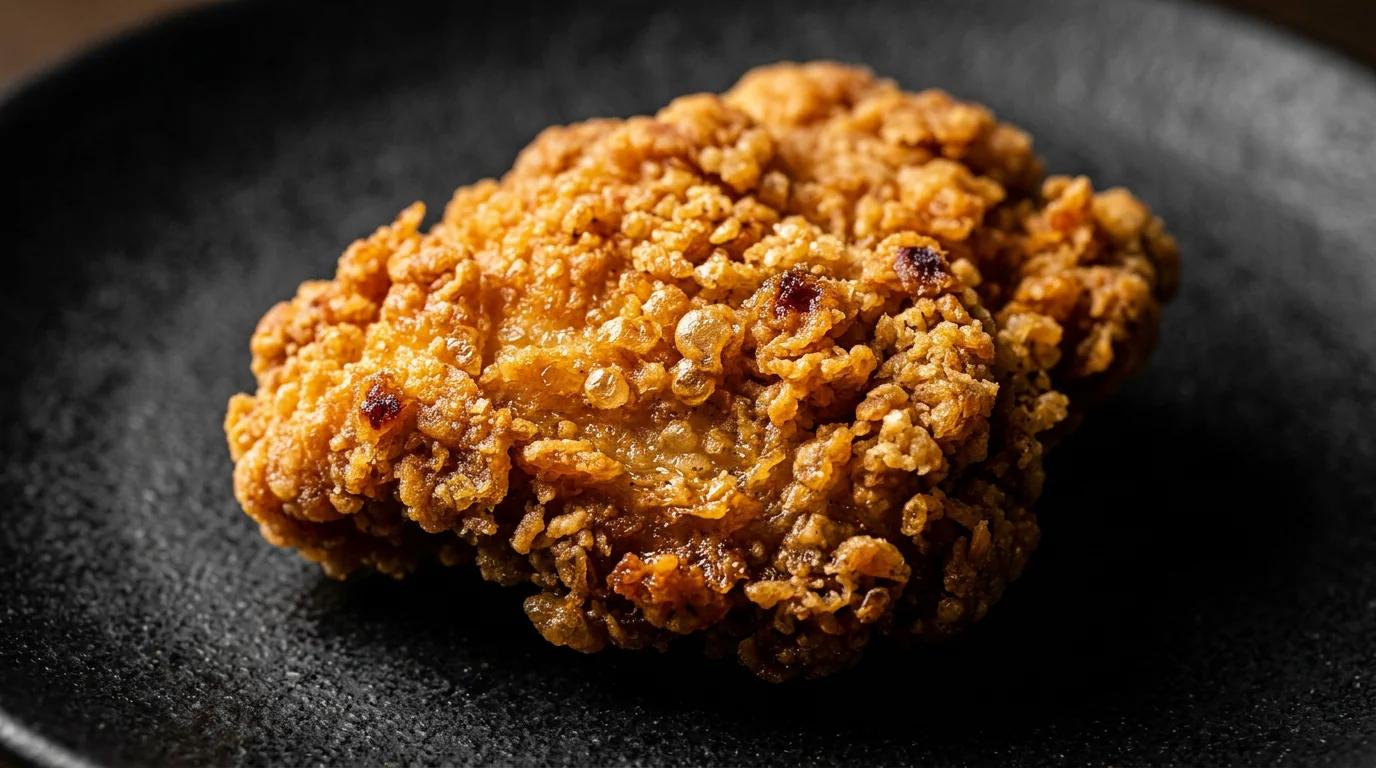
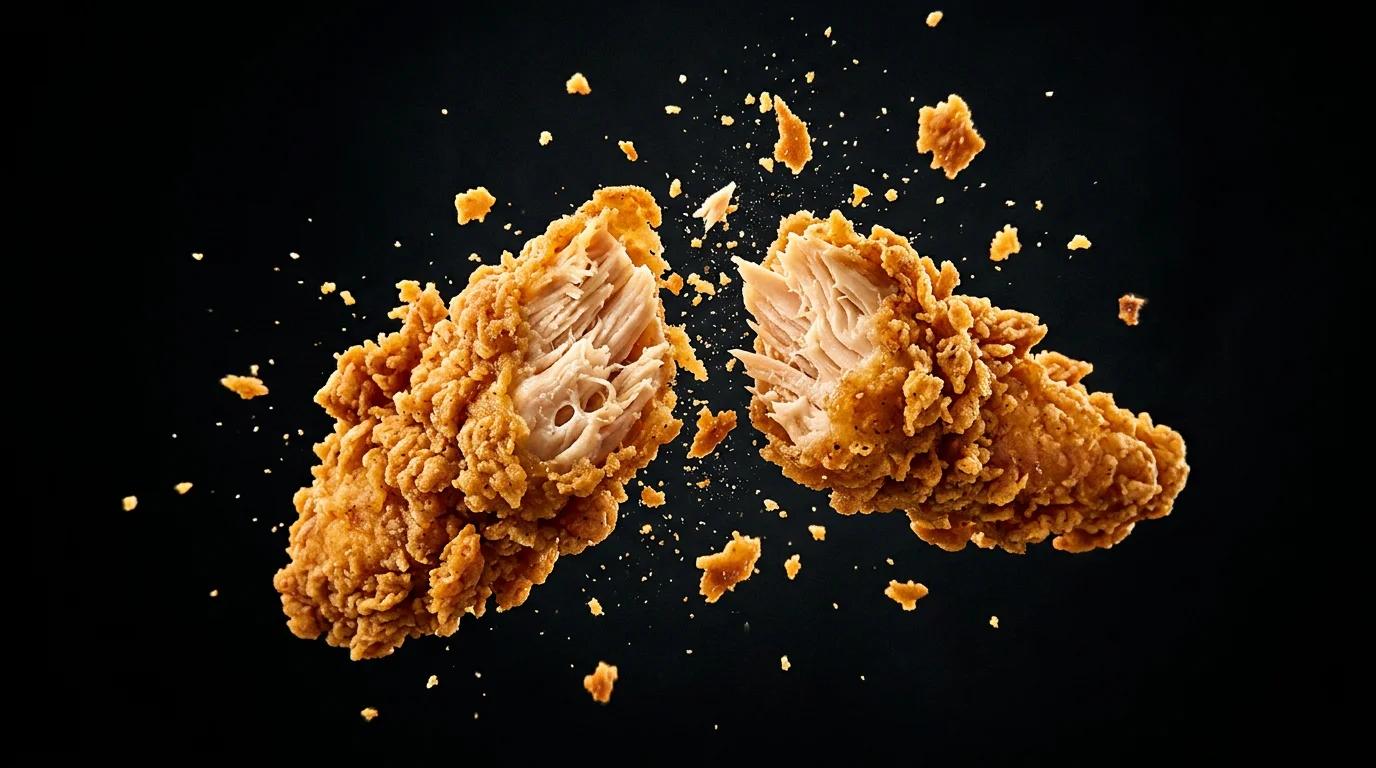
| Beat 1: 0–5s | Macro Crust Shatter Hook | Extreme close-up of crispy skin with micro-particles exploding outward under high-contrast rim light. | Preventing AI breading textures from turning into gelatinous or plastic surfaces. |
| Beat 2: 5–12s | Suspended Chicken Flight & Oil Sheen | Slow-motion orbital pan around rotating chicken drumstick and tender pieces against a dark atmospheric backdrop. | Maintaining consistent product proportions without geometric warping during rotation. |
| Beat 3: 12–20s | Fiery Kinetic Energy & Particle Swarm | Warm amber spice embers and floating crisp flakes swirl around the food, emphasizing bold seasoning. | Calibrating particle opacity so the food remains the hero and is not obscured. |
| Beat 4: 20–26s | Hero Platter Impact | Chicken pieces land forcefully onto a dark stone platter, causing seasoned crumbs to scatter realistically. | Simulating convincing physical weight, deceleration, and ground contact physics. |
| Beat 5: 26–30s | Crispy Headline & Conversion Lockup | Bold “100% Crispy” typographic reveal with clear call to action and warm branded lighting. | Ensuring clean font readability and social platform safe-zone compliance. |
What works well in this execution: The opening macro texture establishes immediate appetite appeal, and the high-contrast lighting gives the food a premium, dramatic presence unlike cheap fast-food footage.
Where it could improve: In later particle sequences, the warm sparks approach the threshold of visual clutter. In commercial food advertising, clarity of the edible product must always triumph over background pyrotechnics.
4. Step 1: Start with a Real Product Brief (Golden Crunch Kitchen)
The biggest mistake beginners make is opening an AI video generator and typing: “cinematic fried chicken commercial.” The result is invariably generic, uncontrollable, and unusable for a real business.
Professional production always begins with a comprehensive Creative Brief. To demonstrate this without impersonating any registered brand, let us build a campaign for a fictional fast-casual brand: Golden Crunch Kitchen.
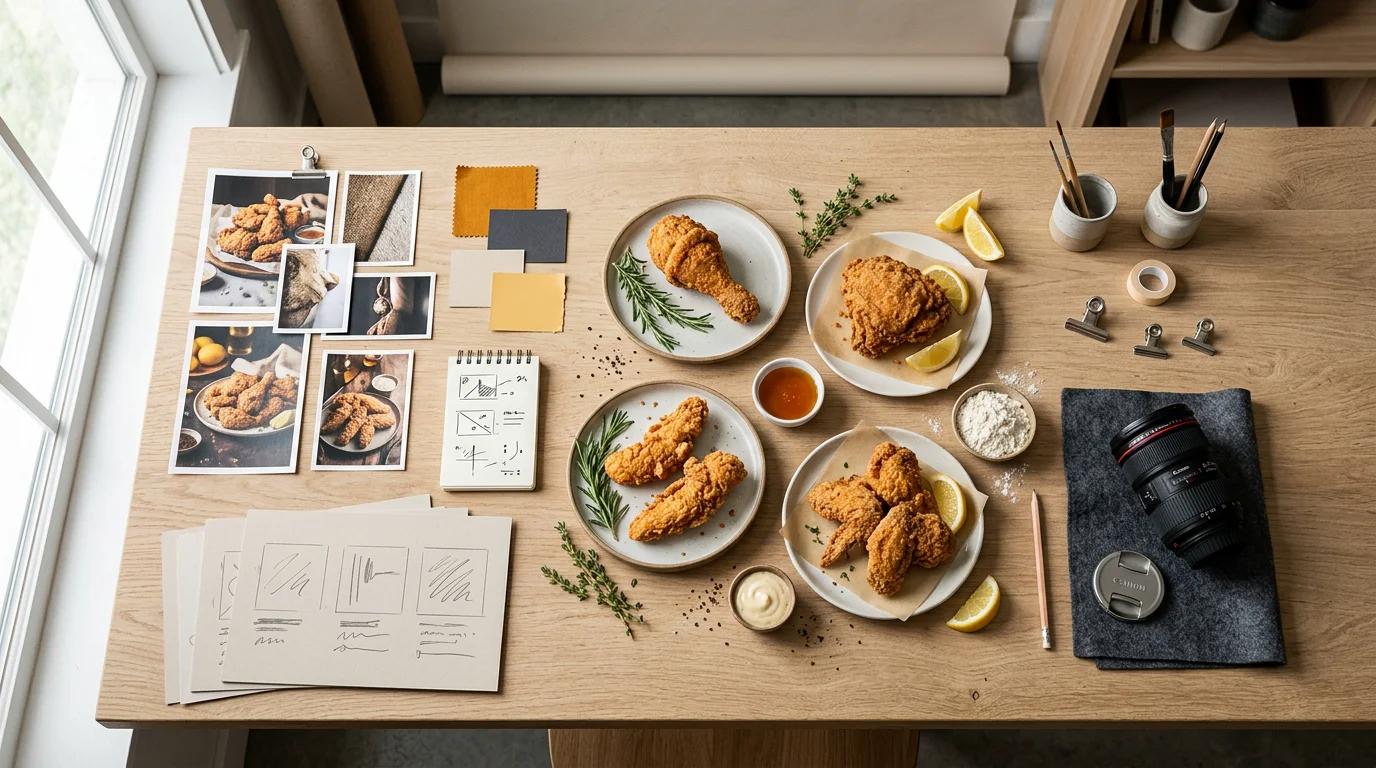
- Brand Name: Golden Crunch Kitchen (Fictional Fast-Casual Brand)
- Hero Product: Buttermilk Double-Dipped Crispy Chicken Tenders
- Key Visual Hook: Audible, visible crust fracture with floating golden flakes
- Brand Palette: Golden Amber (#F59E0B), Deep Charcoal (#1E293B), Warm Cream (#FEF3C7)
- Target Audience: Young urban professionals & food enthusiasts (ages 20–38)
- Core Distribution: Vertical 9:16 for TikTok & Instagram Reels (with 16:9 digital menu board cut)
- Primary Call to Action: “Order Hot & Crispy on the App — 20% Off Your First Box”
- Mandatory Claims: 100% Whole White Meat Chicken • Fried Fresh in Small Batches
📋 Copyable Restaurant Commercial Brief Template:
1. Product Name & Specific Dish: [e.g., Spicy Nashville Tender Sliders]
2. Unique Texture / Appetite Hook: [e.g., Pull-apart cheese melt, shattering crust, glazed honey drizzle]
3. Brand Colors & Mood: [e.g., Rustic brick red, matte black, honey gold]
4. Deliverable Formats: [e.g., 9:16 Vertical (15s & 30s), 1:1 Square, 16:9 Widescreen]
5. Primary Offer / CTA: [e.g., "Taste the Heat — Visit Your Local Store Today"]
6. Physical Reference Assets: [Attach 5+ high-res photos of your real plated food]
5. Step 2: Design the Food Before Animating It
In high-end AI production, you do not animate an idea; you animate a locked reference image. Generating video directly from text without a reference styleframe produces wild, unpredictable variations in food geometry.
Using a photorealistic image foundation model such as Google DeepMind's Nano Banana 2.1, commercial artists first establish an uncompromising visual standard for the food:
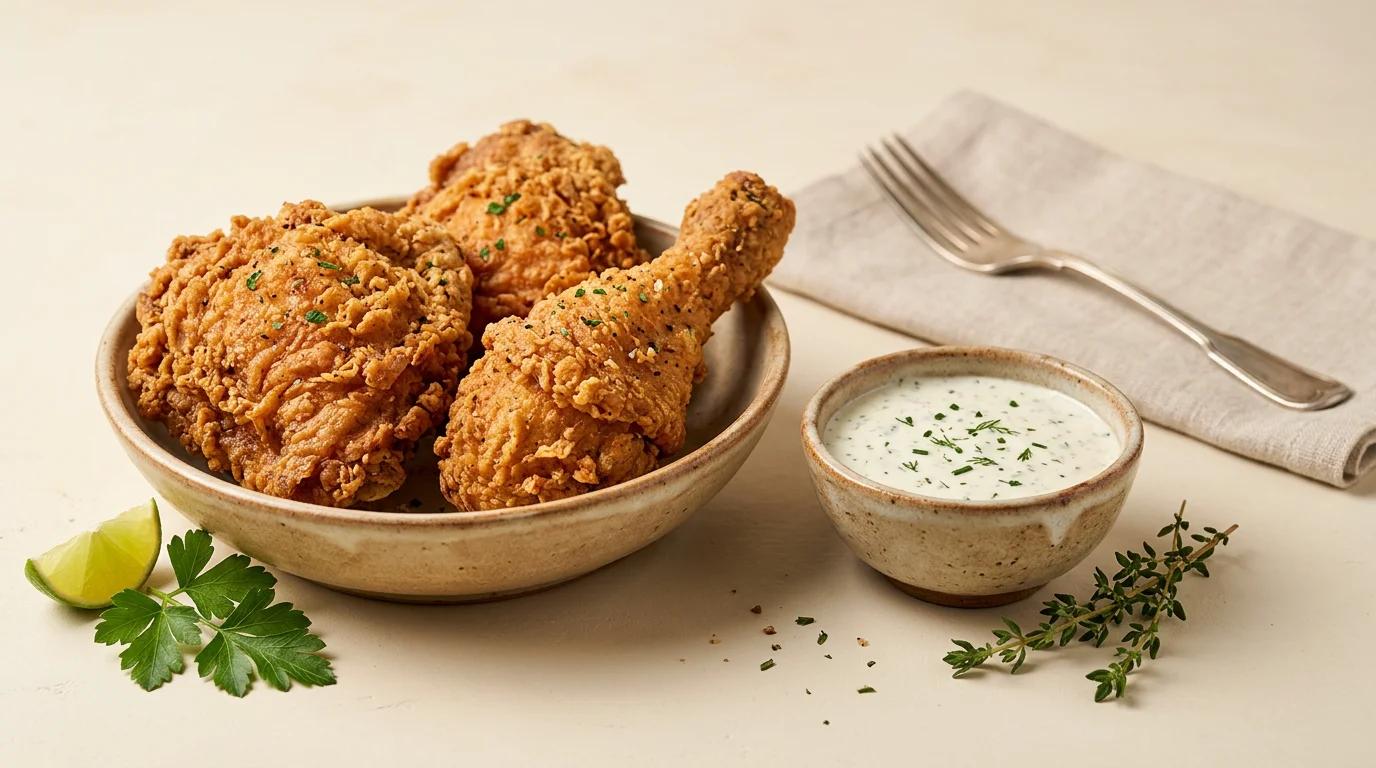
Prompt Engineering for Food Product References
“Crispy golden fried chicken tender on a clean dark slate plate, realistic crunchy breading texture, warm restaurant studio lighting, shallow depth of field, high-resolution food photography, 16:9, no logos, no text.”
“Commercial tabletop photography of three unbranded buttermilk fried chicken tenders resting on matte volcanic basalt, ultra-crisp jagged batter with micro-blisters, delicate flecks of cracked black pepper and paprika, 90mm macro lens at f/2.8, dual softbox key lighting with warm amber rim light from behind, specular oil highlights, dark gradient background, photorealistic 8k, no text, no branding.”
6. Step 3: Turn the Concept into a 30-Second Storyboard
Advertising pacing differs fundamentally from ordinary video generation. A successful food commercial guides the viewer through a proven 5-stage psychological narrative:
The Sensory Hook
Arrest the thumb scroll with an impossible macro shot: a tender snapping in midair with audible crunch foley.
Texture & Craftsmanship Reveal
Smooth camera glide across crunchy ridges, verifying the product's gourmet quality.
Dynamic Culinary Action
Dipping motion into house-made garlic aioli or drifting seasoned breadcrumbs.
Hero Platter Grandeur
The full meal presented in all its glory: fresh golden tenders, crisp fries, and dipping bowls.
Brand Typography & Conversion Call to Action
Clear offer lockup, app download prompt, or store location headline.
Have a Food Product? Let's Turn It into a Commercial.
Partner with AI SiteFlow to produce a cinema-grade 15 or 30-second commercial for your restaurant or consumer brand.
7. Step 4: Animate Food with AI Video Generation
In 2026, AI video generation operates through two primary paradigms:
- Text-to-Video: Generates footage from scratch based solely on written prompts. Useful for atmospheric backgrounds or abstract smoke, but notorious for altering product geometry.
- Image-to-Video (I2V): Ingests an existing photograph or styled frame and uses diffusion transformers to generate temporal motion around it. This is the mandatory workflow for commercial product advertising.
Seedance 2.5: Temporal Stability in Commercial Motion
A documented example of a state-of-the-art model supporting reference-guided video generation is ByteDance's Seedance 2.5. Seedance 2.5 allows directors to input start-and-end keyframes, guiding camera orbits while locking the central product's silhouette across consecutive frames.
Note: Seedance 2.5 is discussed here as an educational reference of current industry capabilities. The original KFC-inspired portfolio piece was produced using custom studio workflows and should not be confused with raw single-model generation.
“Slow continuous 360-degree orbital camera pan around the floating crispy chicken tender. Maintain rock-solid batter geometry and crunchy texture. A subtle shower of golden breadcrumbs detaches gently, drifting downward with natural gravity. Soft amber volumetric rim light shines from the left. 30 FPS, ultra-smooth motion, no shape distortion.”
8. Step 5: Make Food Look Appetizing with Cinematic VFX
Visual effects in food advertising serve one master: appetite enhancement. When compositing food passes, professional artists focus on six core physical elements:
Floating Crumbs
Tiny, irregular flake particles drifting outward to emphasize brittle crispiness.
Controlled Steam
Wispy, translucent heat vapor rising from interior meat fibers to communicate fresh temperature.
Oil Highlights
Pinpoint specular glints that track surface movement without making the food look greasy.
9. Step 6: Edit the Commercial into a Finished Advertisement
The difference between an amateur collection of clips and an effective commercial lies in the edit suite. An editor must:
- Cut to a Rhythmic Beat: Match camera movements and visual hits to an upbeat, non-copyrighted musical score.
- Layer Spatial Foley Sound Effects: Record or source bespoke crunch sounds, sizzles, and deep sub-bass impacts. Sound represents over 60% of the perceived crunch!
- Respect Mobile Safe Zones: Ensure titles, logos, and offers do not collide with TikTok or Reels UI buttons (like, comment, share columns).
✅ Studio Quality-Control (QC) Checklist Before Delivery:
• [ ] Food batter does not morph, pulse, or melt between cuts.
• [ ] Audio crunch foley aligns frame-accurately with the visual fracture.
• [ ] Typography is legible against high-contrast backgrounds.
• [ ] Rendered at native 30 FPS without frame-drop stuttering.
• [ ] Disclaimers and nutritional claims conform to advertising standards.
10. Step 7: Make the Ad Work for Restaurants and Ecommerce Brands
A single high-end commercial asset should power an entire omnichannel campaign. By framing the core product centrally, studios can export:
TikTok, Reels & Shorts
Optimized for full-screen immersive mobile scrolling.
Meta & LinkedIn Feed
Balanced aspect ratio for desktop and in-feed browsing.
Digital Menus & Web
Crisp display behind order counters and on landing page heroes.
11. Nano Banana 2.1 and Seedance 2.5: A Modern AI Creative Workflow
To understand where generative media is heading in 2026, it is useful to look at official model developments from leading research labs:
- Google DeepMind Nano Banana 2.1: According to its official model card, Nano Banana 2.1 is engineered for sub-millimeter texture fidelity, spatial consistency, and multi-view generation. It provides the ideal foundation for generating pristine culinary styleframes.
- ByteDance Seedance 2.5: According to the official Seedance 2.5 announcement, the model supports flexible multi-referencing and smooth camera trajectories, making it possible to choreograph continuous commercial motions around reference objects.
However, technology alone is not a replacement for human taste. Human creative directors must still curate, composite, pace, and sound-design the final output.
13. What Does an AI Food Commercial Cost?
In traditional advertising, producing a 30-second broadcast food spot commonly runs between $50,000 and $250,000 when accounting for studio time, specialized crew, food styling, and post-production houses.
At AI SiteFlow, we provide transparent, fixed-price commercial production packages that empower growing restaurant brands and agencies to produce world-class advertising:
Ideal for local restaurants and quick social launches. Includes 15-to-30-second vertical commercial, core product styling, sound design, and 3-to-5 business day delivery.
Designed for established restaurant chains and consumer goods. Includes advanced multi-pass VFX, multi-ratio deliverables (9:16, 1:1, 16:9), bespoke audio stems, and dedicated creative revision windows.
Custom commercial campaigns requiring multi-scene franchise scaling are individually scoped. View all current production tiers on our official commercial booking portal.
14. 12 Common Mistakes in AI Food Advertising (And Fixes)
Avoid these twelve critical pitfalls when planning your restaurant's AI commercial:
Unnatural Rubbery or Plastic Textures
Fix: Lock food references using high-resolution macro training photos showing authentic surface pores and uneven batter ridges.
Morphing or Pulsing Chicken Geometry
Fix: Use image-to-video diffusion with strict keyframe trajectory bounds rather than open-ended text prompts.
Garbled or Distorted Packaging
Fix: Composite genuine vector packaging artwork and logos in post-production instead of forcing the AI to generate text.
Excessive Fire & Scorched Appearance
Fix: Eliminate words like 'fire' or 'explosion' from prompts; use 'warm directional key light' and 'amber steam' instead.
Swarming Particle Clutter
Fix: Keep crumb particle opacity below 40% so the edible hero food remains 100% visible at all times.
Weak Opening Hook (Slow Fade-In)
Fix: Show the most dramatic food action (crack, dip, bite) on frame 1 to capture social media attention immediately.
Inconsistent Color Temperatures Between Cuts
Fix: Grade all assembled clips in a unified ACEScg color space to ensure batter warmth matches across every shot.
Product Disappearing Behind Effects
Fix: Follow the rule of food primacy: effects must radiate away from the product, never obscure it.
Unrealistic Portion Proportions
Fix: Provide real plate or hand reference scales to ensure chicken tenders do not look like boulders.
Misleading Visual Product Claims
Fix: Only feature ingredients, sauces, and preparations that accurately represent your real-world restaurant menu.
Ignoring Mobile Safe Zones in 9:16
Fix: Keep all titles and CTAs inside the central 80% boundary of the screen so social buttons do not cover them.
No Clear Commercial Call to Action
Fix: Conclude with an unambiguous next step: 'Order Online', 'Find Your Nearest Store', or a clear promotional promo code.
15. A Practical 30-Second AI Food Commercial Workflow for Beginners
Follow this clear step-by-step workflow to execute your first cinematic food commercial:
- Step 1: Document the Dish. Take 5 clean photos of your actual menu dish under daylight on a neutral background.
- Step 2: Generate Locked Styleframes. Ingest your photos into an advanced model (like Nano Banana 2.1) to create clean, high-resolution styleframes with dramatic studio lighting.
- Step 3: Define 5 Storyboard Beats. Write one sentence per shot: Hook (0–3s), Detail (3–8s), Action (8–15s), Hero (15–24s), Offer (24–30s).
- Step 4: Generate Controlled Video Passes. Use an image-to-video workflow with slow, continuous camera pans. Reject any clip where the food morphs.
- Step 5: Assemble and Add Crunch Foley. Place clips on a video timeline, synchronize cuts to background music, and add frame-accurate crunch sound effects.
- Step 6: Master and Publish. Add your official logo and end-card offer, verify mobile safe zones, and export in vertical 9:16 format for social ad campaigns.
16. How Marketing Agencies Can Add Cinematic AI Ads to Their Services
Performance marketing agencies, social media boutiques, and restaurant consultants frequently face a production bottleneck: their clients need fresh video creatives every two weeks, but lack the budget for traditional live-action shoots.
By partnering with AI SiteFlow as a white-label commercial production unit, agencies can:
- Deliver high-margin video ad packages without hiring in-house 3D/VFX artists.
- Win enterprise restaurant pitches by presenting finished 30-second speculative concepts during prospective client calls.
- Rapidly test multi-variant hooks to combat creative fatigue and drive down client Customer Acquisition Costs (CAC).
Agency Partner? Add Cinematic VFX Production to Your Services.
White-label commercial production for creative agencies and restaurant marketing teams.
17. Frequently Asked Questions About AI Food Commercials
Explore answers to key questions from restaurant owners, marketing directors, and creative agencies exploring AI commercial production:
Yes, when guided by professional creative direction and rigorous reference conditioning. Rather than prompting a single prompt into an AI video generator, professional studios design the product styling first, lock the physical geometry with multi-view image models like Nano Banana 2.1, and animate camera trajectories with models like Seedance 2.5 before applying color grading and foley sound design.
A production studio needs 4 to 8 clean, well-lit studio photographs of the real food item: top-down, 45-degree angle, macro close-up of batter/crust texture, cross-section/interior cut, and unbranded packaging. High-resolution reference photos ensure the generated visuals remain faithful to your real menu items.
18. Conclusion — Bring Your Next Food Commercial to Life
Generative AI is not here to replace genuine food craft; it is here to democratize cinematic visual storytelling. When technical execution is grounded in real appetite appeal, thoughtful lighting, and disciplined post-production, growing food brands can compete on the same visual stage as global franchise giants.
AI SiteFlow creates cinematic AI commercials, product advertisements, and advanced VFX concepts for brands and agencies worldwide.
Your Product Deserves a Cinematic Story.
From bold food visuals to premium product advertising, AI SiteFlow creates custom cinematic commercial concepts for brands and marketing teams.
Sources, Documentation & Editorial Policy
This article was researched, authored, and verified by Waqas Ahmad, Founder & AI Commercial Creative Director at AI SiteFlow. Written in compliance with Google Search Central Helpful Content Guidelines and Google Search Essentials:
- Google DeepMind: Nano Banana 2.1 Multimodal Model Architecture & Specifications
- ByteDance Seedance 2.5: One-Take Creation & Flexible Multi-Referencing Video Generation
- AI SiteFlow Portfolio: 100% Crispy Commercial Concept (YouTube ID: iR86SgO4GPA)
© 2026 AI SiteFlow (aisiteflow.agency). All rights reserved. This creative project is an independent artistic and technical study not commissioned, sponsored, approved, or endorsed by KFC or Yum! Brands. All trademarks belong to their respective owners.