ChatGPT Ads Expand to 89 Countries in 2026: What the Latest AI Advertising Update Means for Businesses
The future of digital advertising is becoming more conversational.
On October 21, 2026, OpenAI announced a major global expansion of ChatGPT Ads, introducing advertising availability in 26 additional countries and bringing the platform to 89 markets worldwide. The company also revealed that more than 100,000 advertisers have used ChatGPT Ads since its launch.
For digital marketers, growing businesses, creative agencies, and advertisers, this is one of the most interesting AI advertising developments of 2026.
People are increasingly using conversational AI to research products, explore services, compare options, and make purchasing decisions. Instead of typing a few words into a search engine, they can explain their needs in detail and refine their choices through follow-up questions.
That creates a new opportunity for brands to become discoverable during the decision-making process.
But how does ChatGPT advertising actually work? Which countries are supported? Can businesses in Pakistan or Dubai use it? And what should marketers do next?
Here is what the official announcements tell us—and what businesses can realistically learn from them.
1. What Happened in the October 2026 ChatGPT Ads Update?
OpenAI's October 21 announcement marked another step in its worldwide advertising rollout.
The latest expansion added 26 countries, increasing the total number of supported markets to 89. Among the newly highlighted markets were Pakistan, Bangladesh, Nigeria, South Africa, Cambodia, Serbia, and Ukraine, alongside additional Latin American countries.
OpenAI also disclosed that more than 100,000 advertisers had run campaigns through the platform.
Another major figure provides context: according to OpenAI, ChatGPT serves more than 1.2 billion weekly users.
However, that figure describes overall platform usage—not the number of people who will see advertisements. Ad exposure depends on eligibility, supported regions, available placements, and whether an advertisement is relevant to the user.
The main takeaway is the scale of expansion. ChatGPT Ads is no longer limited to a small initial test in one market. It is developing into an international advertising channel with growing advertiser participation.
For brands operating across multiple countries, that makes conversational AI advertising worth researching alongside established channels such as Google Ads, Meta Ads, and other digital platforms.
2. Which Countries Can Use ChatGPT Ads in 2026?
The October expansion covers a wider range of markets across Asia, Africa, Europe, the Middle East, and Latin America.
Pakistan and Bangladesh are especially notable additions for South Asian businesses. Nigeria and South Africa represent important new opportunities in African markets, while the wider rollout also includes European and Latin American countries.
Businesses in established markets, including the United Arab Emirates, can also explore ChatGPT advertising where advertiser access is supported.
Advertiser availability and audience eligibility are not the same thing. Being able to create an advertising account does not mean every ChatGPT user in that country will receive ads.
OpenAI maintains a country-by-country list showing where self-service access is available. Businesses should verify the latest status before planning campaigns, especially when their company is registered in one country but serves customers elsewhere.
Another consideration is account targeting. Some newly created advertiser accounts may initially have geographic restrictions, even when additional countries are supported by the platform.

3. How Does Advertising in ChatGPT Work?
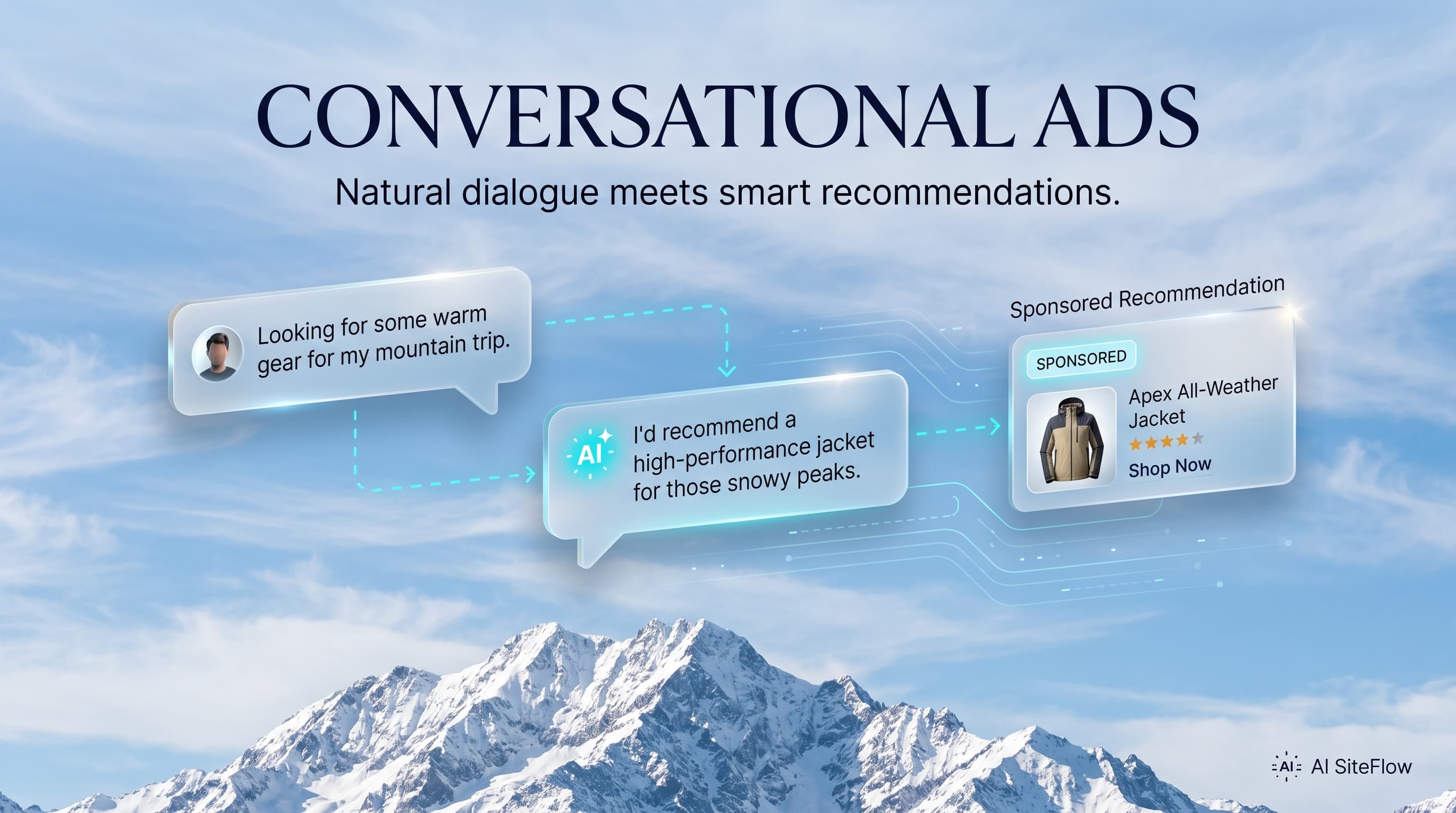
Traditional search advertising often begins with an individual query. A person searches for a product, and advertising systems identify sponsored results associated with that request.
Conversational advertising introduces a different environment.
Imagine a user planning to buy an apartment in Dubai.
Their conversation might begin with a broad question about neighborhoods, continue with budget considerations, and move toward comparing property types, location preferences, and available services.
Over several messages, the person's needs become more specific.
OpenAI explains that its advertising system is designed to evaluate relevant context and evolving intent rather than simply relying on isolated search keywords.
The process includes identifying potential ads, checking eligibility, evaluating relevance and quality, and running an advertising auction.
The important distinction is that the advertising selection system is separate from the system generating ChatGPT's answer.
Ads are labeled as sponsored placements. They do not control, rewrite, or purchase favorable answers from the assistant.
This approach could create useful opportunities for businesses whose services match a person's developing needs. However, an advertiser cannot force an ad to appear for a particular conversation, and participating in the platform does not guarantee impressions or sales.
4. Why Conversational AI Advertising Matters for Brands
The biggest potential change is not simply the introduction of another advertising dashboard.
It is the difference between reaching someone who is casually browsing and someone actively researching a decision.
A customer may need several interactions before choosing a service. Conversational interfaces can help them clarify that need.
For example, a person considering a website redesign could explore different technology options, compare development approaches, and ask what makes a trustworthy digital agency.
An appropriate sponsored placement might introduce a relevant service during that research journey.
From a marketing perspective, that makes message relevance, accurate information, and helpful landing pages especially important.
Businesses should avoid assuming that a catchy headline alone will be enough.
A stronger advertising message answers practical questions: What does the business provide? Who is it for? What problem does it solve? What can a potential customer do next?
The brands best prepared for conversational advertising may be those that can explain their value clearly and support their claims with genuine work.
5. The Rise of Visual AI Advertising
ChatGPT advertising is not limited to written copy.
Earlier in October, OpenAI introduced a new visual advertising format designed to help people discover products and services through imagery.
The company described a format being tested during image generation for eligible Free and Go users. Sponsored content remains separate from the image being created.
For marketers, this is an interesting development because visuals play an important role in communicating complex or premium offerings.
Consider luxury property marketing. A thoughtfully composed architectural image can establish a property's visual character faster than a long paragraph.
The same principle applies to hospitality, fashion, consumer products, and premium services.
However, businesses should distinguish between the visual formats currently being tested and their broader creative strategy. The announcement does not establish that arbitrary video commercials can be uploaded and delivered in every ChatGPT advertising placement.
Cinematic videos can still support a brand's landing pages, social campaigns, and promotional portfolio, even when a particular advertising platform uses static imagery.
6. What This Means for Dubai Real Estate, Hospitality, and Luxury Brands
Some industries naturally lend themselves to detailed, consideration-driven conversations.
Dubai Real Estate
Property buyers typically compare several factors before making an inquiry: location, lifestyle, budget, developer credibility, building amenities, and financing considerations.
For real estate agencies and developers, accurate project information and clear property presentations are especially valuable.
A strong marketing destination should explain the offering honestly, distinguish real project footage from conceptual visuals, and make the next step easy for interested buyers.
Hotels and Hospitality
Travelers may compare hotels based on location, amenities, experience, and budget.
Hospitality marketers can support these decisions with accurate service descriptions, attractive original imagery, and clear booking information.
Luxury Consumer Brands
Premium products often rely on distinctive design, storytelling, and perceived quality.
Elegant commercial photography or cinematic video may help communicate those qualities outside the advertising placement, while concise copy can explain actual product benefits.
Creative and Digital Agencies
Agencies can benefit from clear service positioning, real portfolio examples, understandable processes, and transparent contact information.
The common principle across all four categories is simple: credible presentation matters more than exaggerated advertising promises.

7. Can Businesses in Pakistan Start Advertising on ChatGPT?
Pakistan is one of the countries highlighted in the October 21 expansion, making this announcement particularly relevant to local agencies, e-commerce businesses, and service providers.
OpenAI's advertiser availability documentation lists Pakistan among the countries supported for self-service access.
That is encouraging, but several practical conditions still apply.
An advertising business must meet the applicable account, legal entity, billing, verification, and campaign requirements. Country-targeting permissions may also depend on the account's status.
A Pakistan-based business that serves customers in Dubai should not assume that creating an account immediately provides unrestricted access to UAE advertising inventory.
The right approach is to inspect the available targeting settings and verify eligibility within Ads Manager.
Small businesses should also evaluate their economics before spending money. A new platform can offer learning opportunities without necessarily becoming the most profitable acquisition channel immediately.
For many local businesses, the best first step will be preparing strong messaging and a trustworthy website, then deciding whether paid testing fits the marketing budget.
8. How to Prepare Your Business for ChatGPT Ads
Businesses do not need to abandon their existing marketing strategy.
Instead, they can use the emergence of conversational AI advertising as a reason to improve the fundamentals.
Start with a clear offer
Explain exactly what the business sells or provides. Avoid vague claims that could apply to any competitor.
Create a dedicated landing page
A relevant service or product page is generally more useful than sending every advertising visitor to a generic homepage.
Build informative creative variations
Different customers care about different benefits. A luxury property buyer may value location, while another buyer may prioritize amenities or layout.
Use relevant imagery
Product photographs, legitimate architectural visuals, and well-labeled concept illustrations should support the message rather than distract from it.
Make the next action obvious
Visitors should be able to inquire, book, request information, or view the relevant service without unnecessary friction.
Measure outcomes
Track impressions, clicks, qualified inquiries, and other business-relevant results where reporting and tracking options are available.
OpenAI's own advertiser guidance emphasizes useful copy, accurate claims, creative variety, and relevant landing pages.
9. How AI SiteFlow Approaches the Future of Advertising
At AI SiteFlow, we focus on the creative side of digital marketing: cinematic AI-powered commercials, premium digital experiences, and custom websites.
The rise of conversational advertising reinforces an important idea: a brand's message should remain consistent wherever a potential customer discovers it.
A compelling advertisement can create curiosity, but the experience does not end there.
The landing page should clearly represent the business. Its visual style should feel connected to the campaign. The page should load reliably on mobile devices. Contact options should be easy to find.
For luxury brands, thoughtful creative direction can help communicate the look and feel of an offering.
For real estate developers, concept videos can demonstrate a visual direction before a full campaign is commissioned, provided that fictional visuals are clearly identified and are not presented as real properties.
For agencies, a portfolio of original work can help potential clients assess production quality.
None of these elements guarantees conversions. Together, however, they provide a more coherent and trustworthy brand experience.
Explore our AI commercial portfolio to see examples of cinematic brand storytelling.
10. ChatGPT Ads vs. Google Ads and Meta Ads
ChatGPT Ads enters a competitive digital advertising landscape.
Google Ads can help businesses reach people through supported search, shopping, display, and other advertising experiences.
Meta Ads supports advertising across Meta's platforms, where businesses commonly use visual creative, video, and audience-targeting tools.
ChatGPT Ads introduces a conversational environment in which advertising relevance may reflect a user's evolving context and intent.
These are different customer experiences, not interchangeable platforms.
A business that gets results from Google or Meta should not automatically replace those channels because ChatGPT Ads is expanding.
A more sensible approach is to treat conversational advertising as an additional channel to evaluate.
Before comparing results, consider campaign goals, available inventory, audience eligibility, attribution limitations, and the cost of customer acquisition.
The platform is still evolving, and universal performance benchmarks should not be assumed.
11. Privacy, Transparency, and User Trust
Privacy is central to discussions about advertising inside an AI assistant.
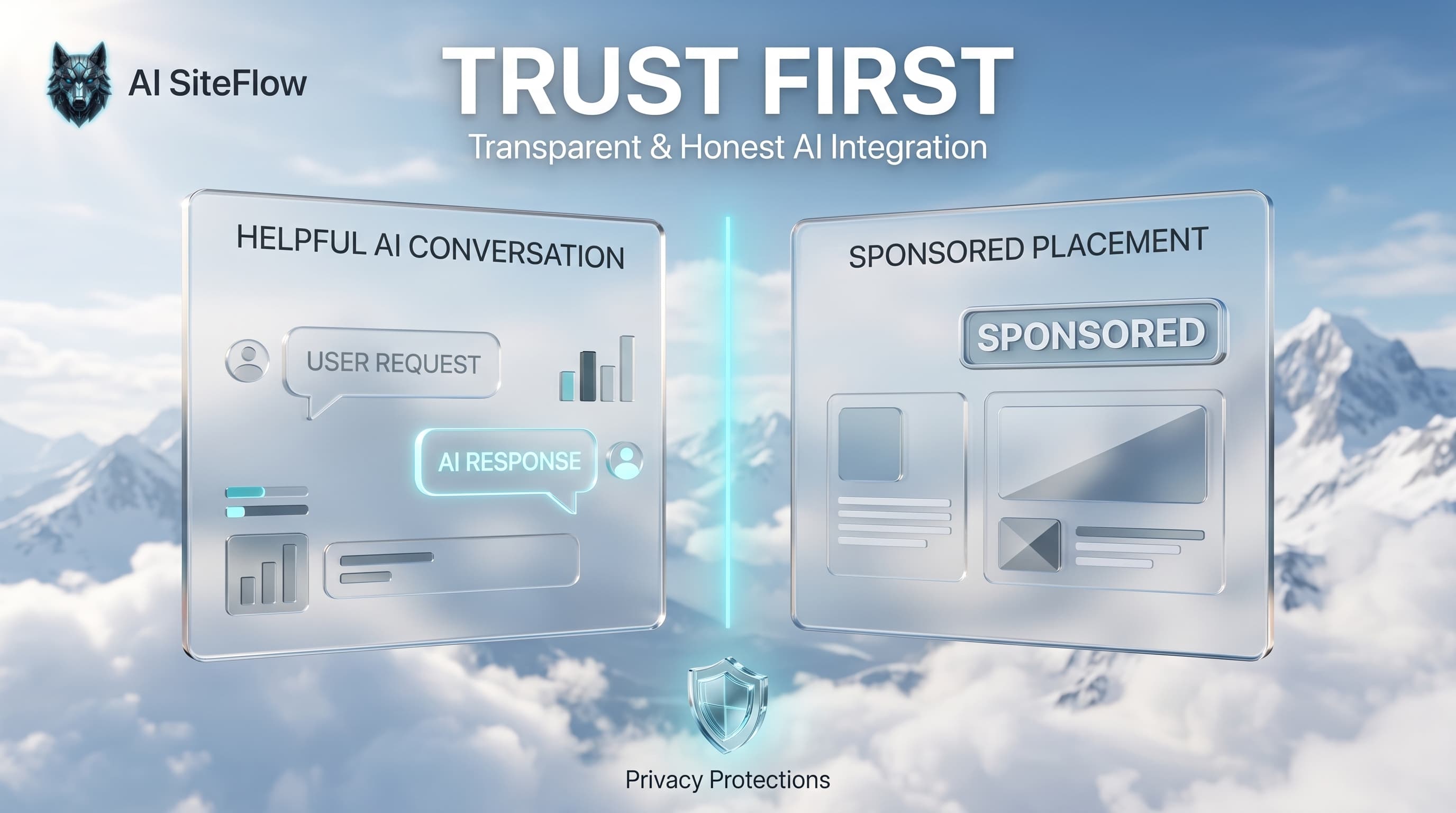
OpenAI says advertisers do not receive access to private ChatGPT conversations, chat histories, memories, or personal information through the advertising system.
Ads are clearly labeled and separated from ChatGPT's answers.
Paid placements also do not change or influence those answers.
According to OpenAI's documentation, ads may be shown to eligible users on the Free and Go plans. Plus, Pro, Business, Enterprise, and Edu accounts are not shown these ads.
The company also provides controls related to ad personalization and feedback, with availability depending on region and account eligibility.
For businesses, these restrictions are important to understand.
Advertisers should not assume they can read a customer's private research conversation or buy favorable recommendations.
Strong advertising must operate within the platform's privacy and transparency framework.
12. Frequently Asked Questions About ChatGPT Ads in 2026
Is ChatGPT Ads available in Pakistan?
Yes. Pakistan was included in OpenAI's October 2026 expansion announcement and appears in the company's advertiser availability guidance. Businesses must still satisfy account and campaign requirements.
How many countries support ChatGPT Ads?
OpenAI announced availability across 89 markets on October 21, 2026, following the addition of 26 countries.
Can anyone see advertisements inside ChatGPT?
No. Ads depend on eligibility, location, plan, and relevance. They may appear on eligible Free and Go experiences, while paid ad-free plans remain separate.
Can advertisers influence ChatGPT answers?
No. OpenAI states that advertising operates independently of its answer-generation system. Sponsored placements are labeled separately.
Are ChatGPT Ads the same as Google AdSense?
No. ChatGPT Ads is OpenAI's advertiser platform. Google AdSense is a separate Google product used by eligible publishers to monetize website advertising inventory.
Do ChatGPT Ads guarantee better conversions?
No. Results depend on the offer, targeting, creative, landing page, measurement, competition, and campaign execution. Businesses should test performance rather than relying on generalized promises.
Can real estate agencies use AI-generated video commercials?
AI-generated commercials can support marketing campaigns and portfolios. Where visuals depict fictional buildings, invented amenities, or concept properties, that distinction should be clear so viewers are not misled.
Conclusion: The Next Phase of AI Advertising Has Begun
The October 2026 ChatGPT Ads expansion is a significant milestone for conversational advertising.
With 26 new countries, 89 supported markets, and more than 100,000 advertisers having tried the platform, OpenAI is building an international advertising business around a different kind of discovery experience.
For marketers, the opportunity is worth understanding—but success will still require relevant offers, accurate information, useful creative, and measurable results.
The smartest brands will not chase AI advertising hype. They will experiment carefully, build trust, and make every customer interaction more useful.
Official Sources & Further Reading
- 1. OpenAI — ChatGPT Ads Expands to 26 New Countries (October 21, 2026)
- 2. OpenAI — How We Built ChatGPT's Novel Ad Stack (October 21, 2026)
- 3. OpenAI — Building Advertising for the Way People Use AI (October 5, 2026)
- 4. OpenAI Help Center — Ads Manager Availability
- 5. OpenAI Help Center — Create Ads for ChatGPT
- 6. OpenAI Help Center — Ads in ChatGPT
Elevate Your Brand Storytelling for Conversational Discovery
Whether preparing for conversational AI advertising or dominating social media feeds, AI SiteFlow engineers high-converting 4K neural cinema commercials and sub-second digital storefronts.