
Gemini 4 Argon: Features, Pricing & How to Use It in 2026
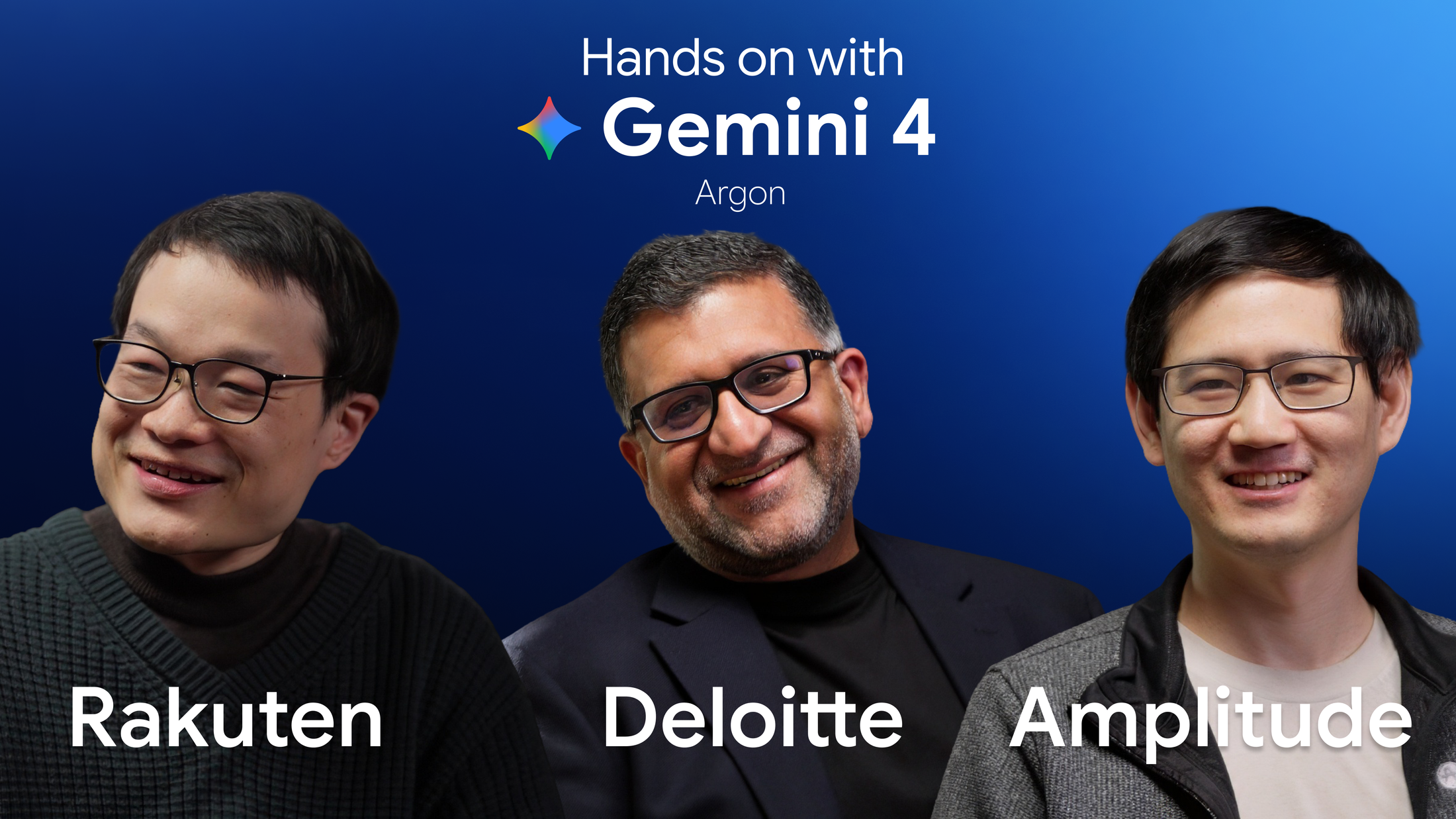
Google's Gemini 4 Argon became broadly available on October 13, 2026, bringing advanced reasoning to developers, businesses and paid Gemini users. If you are comparing AI tools, the useful questions are straightforward: what can Argon actually do, how much does it cost, where can you access it, and when should you choose another model? This independent guide answers those questions using Google's launch materials and developer documentation, rather than treating launch demos as guaranteed everyday results.
Quick answer: Gemini 4 Argon is Google's flagship reasoning model for demanding coding, research, mathematics and multi-step professional workflows. Paid Google AI Pro and Ultra subscribers can access it in the Gemini app, while developers can use model ID gemini-4-argon through supported paid API services. API introductory pricing runs through November 30, 2026.
What is Gemini 4 Argon?
Argon belongs to the Gemini 4 family and is built for tasks requiring sustained reasoning across many steps, files or tools. Google initially announced it in late September with a restricted rollout to vetted cybersecurity defenders. On October 13, it expanded availability to developers, enterprises and eligible consumers. The initial announcement was not the same as broad public access.
Instead of being positioned as a fast, inexpensive model for short answers, Argon targets complex problems where checking assumptions and tracking dependencies are essential. Examples include analysing software architecture, working through technical research, or understanding multiple documents before preparing a structured response. Google's benchmark announcements suggest strong capabilities, but its own benchmark presentation cannot guarantee that a particular workload will improve.
Gemini 4 Argon features: what is genuinely new?
1. Deep reasoning for complex work
Google highlights software engineering, quantitative analysis, scientific investigation, financial work and legal-document workflows. Argon can help organise a long task and reason through interconnected steps rather than compose a quick answer. Businesses could use it to prepare drafts and analyses, provided humans verify outputs before decisions are made.
2. A one-million-token unified context limit
According to the official Gemini API model documentation, Argon supports a unified input-and-output token limit of 1,048,576. Standard synchronous requests have a default maximum output of 65,536 tokens; longer outputs require supported configurations. Large context helps with extensive source material, but does not imply perfect recall or make giant prompts automatically efficient.
3. Multimodal inputs and developer tools
The model accepts text, images, video, audio and PDF inputs and returns text output. Developer capabilities include function calling, structured outputs, code execution, search grounding and, in supported configurations, computer use. Argon is not itself a video or image generator. When an app creates visuals alongside an Argon conversation, dedicated generation models or tools may produce those assets.
4. Adjustable thinking levels
Developers can choose low, medium or high reasoning settings, with medium documented as the default. A classification task may not need high reasoning, while complicated debugging might. Test the trade-off among latency, cost and accuracy on your actual workloads.
How to use Gemini 4 Argon today
- Gemini app: Open gemini.google.com, sign in and check the model selector. Google's release notes say Argon is available to Google AI Pro and Ultra subscribers, subject to account eligibility.
- Google AI Studio: Developers can visit AI Studio and select Argon where their paid access permits it.
- Gemini API: Use identifier
gemini-4-argonin a supported paid API workflow. Begin with a small reproducible request before production integration. - Google Antigravity: Google promotes Argon for agentic coding, with Ultra-tier availability described in launch material. Check subscription eligibility.
Google also announced access through AI Mode in Search for eligible paid users. Availability and usage limits vary by product, region and account. If Argon does not appear, check your plan and Google's official release notes rather than assuming free access.
Gemini 4 Argon pricing: introductory vs standard
Official guidance lists introductory Gemini API pricing through November 30, 2026. From December 1, published standard rates double. These are API token prices, not monthly subscription prices.
| API usage | Through Nov 30 | From Dec 1 |
|---|---|---|
| 1 million input tokens | $2.00 | $4.00 |
| 1 million output tokens, including thinking | $10.00 | $20.00 |
| 1 million cached input tokens on qualifying hits | $0.10 | $0.20 |
For illustration, one million ordinary input tokens plus 100,000 output tokens costs approximately $3.00 at introductory rates before any other applicable charges. Actual bills depend on consumption, especially reasoning/output tokens. Documentation says implicit caching discounts qualifying cached input by 95%; not every request gets the discount. Check the developer pricing guide before relying on these rates.
Gemini 4 Argon vs earlier Gemini models
The most useful comparison is not “newer means better.” Faster Flash-family models focus on efficient routine throughput, while Argon emphasises challenging reasoning and long-running professional tasks. A simple product-description rewrite may be more economical with a smaller model. A complex multi-file code migration could justify additional reasoning cost.
To evaluate fairly, give each candidate the same real task, source material and grading rubric. Compare factual correctness, completion, time, human corrections and total cost. Avoid declaring a universal winner from one demo or leaderboard. Google reports strong results, but performance varies with task design and evaluation methods.
Three workflows worth testing
For developers: debug a difficult feature
Provide relevant code, error logs, environment information and test expectations. Ask Argon to list hypotheses, identify evidence that distinguishes them, and propose a minimal patch with regression tests. Run those tests yourself. The goal is reducing investigation time without weakening review standards.
For businesses: analyse documents with citations
Upload authorised reports or policies, then request a table of contradictions, missing clauses, deadlines and source locations. Ask the model to separate quotations from interpretation and mark unknowns. For finance, medicine or law, retain qualified professional review. Never upload confidential material without checking data-handling terms.
For creators: build a researched production brief
Use Argon to compare verified product facts, summarise a brief, plan a story and draft visual-consistency checks. For an AI commercial, it can help plan scenes, but a dedicated video-generation tool must render footage. This avoids choosing the wrong tool.
Limitations and risks
- Reasoning is not certainty: Argon can make unsupported claims; verify important answers.
- Long context is not unlimited attention: Divide large tasks into steps with clear references.
- Paid access matters: API use is not listed as free-tier access; consumer eligibility depends on subscriptions.
- Latency and costs vary: More reasoning and output may make requests slower and more expensive.
- Tools differ by product: An API capability may not appear in every Gemini interface.
Google's safety overview describes its evaluations and safeguards. Organisations should restrict tool permissions, require human approval for external actions and maintain auditable records when sensitive systems are involved.
Is Gemini 4 Argon worth trying?
Yes, for difficult work. Its appeal is sustained reasoning over connected problems, sources and tools. It is less compelling for short, inexpensive requests. Start with a small pilot: define one outcome, set a spending cap, compare against your current model, and retain the more useful workflow.
For a video perspective, see Sam Witteveen's October 13 first-look review discussing demos and comparisons. This independent article relies on documentation; AI SiteFlow has not claimed to run hands-on Argon benchmarks.
Frequently asked questions
When was Gemini 4 Argon released?
Google announced restricted early access in late September 2026, then broader availability on October 13, 2026.
Is Gemini 4 Argon free?
Google does not list it as a free-tier API model. Gemini app access is available to eligible Google AI Pro and Ultra subscribers. Confirm your current plan.
Can it generate images and videos?
Its documented output type is text. It understands multimodal input and may coordinate tools using separate media models, but it is not documented as a native image or video output model.
What is its API name?
Use gemini-4-argon.
Official sources and further reading
- Google's October 13 public launch announcement
- Official model specifications
- API migration and pricing guide
- Gemini app availability announcement
Editorial note: Information checked October 16, 2026. Access and prices may change. Product claims are attributed to Google; recommendations are editorial guidance rather than independent performance testing.