
China's $480 Billion AI Stock Crash in 2026: Why Robotics Hype Is Facing Reality

Introduction: China's AI Boom Meets a Financial Reality Check
China's artificial intelligence industry is entering one of its most challenging financial periods of 2026.
After years of enthusiastic investment in semiconductors, humanoid robots, data-center equipment, and emerging AI technologies, Chinese technology stocks have suffered a dramatic correction.
According to a Reuters analysis published on October 26, 2026, the Shanghai STAR 50 index dropped approximately 40% in less than four months, erasing an estimated $480 billion in market value. The figures have raised questions about the sustainability of China's AI investment boom.
Meanwhile, Chinese robotics companies continue demonstrating sophisticated humanoid machines at major technology exhibitions, including ROBOTECH 2026 in Shenzhen.
This creates an apparent contradiction: China's robotics technology continues advancing, yet investors are questioning whether technology companies can generate profits sufficient to justify their valuations.
Understanding this distinction is essential. The $480 billion decline does not mean China's robotics industry has stopped developing. Nor does it mean investors withdrew $480 billion in cash during a single exhibition. Instead, it reflects a substantial reassessment of technology-company valuations, commercial expectations, and investment risks.
What Does the $480 Billion Loss Actually Mean?
The most important detail is understanding the difference between market capitalization and cash withdrawals.
Reuters reported that China's STAR 50 index had declined approximately 40% from its earlier highs, eliminating roughly $480 billion in shareholder market value.
The STAR 50 tracks 50 major companies listed on the Shanghai Stock Exchange's Science and Technology Innovation Board, representing important segments of China's advanced technology economy.
The index includes technology businesses across several industries, such as integrated circuits, specialized software, new materials, and advanced equipment. It is not exclusively a robotics index.
Was $480 Billion Actually Withdrawn?
No verified evidence establishes that investors withdrew exactly $480 billion in cash.
Market capitalization represents the market value of outstanding company shares. For example, imagine a company valued at $100 billion. If its stock price falls 40%, its market capitalization could decline to $60 billion, assuming the number of shares stays unchanged.
That creates a $40 billion paper reduction in market value. It does not necessarily mean $40 billion was transferred out of the stock market.
The same distinction applies to China's estimated $480 billion decline. Reuters reported the market-value estimate, while independent calculations underlying that estimate were not fully detailed in the published report.
The Shanghai Stock Exchange's September 2026 newsletter also documented pressure on the STAR 50, including a monthly decline of 9.17% and a trailing price-to-earnings ratio of approximately 99.48. These figures demonstrate that the market had already experienced substantial volatility before the late-October headlines.

Why Did China's AI Stocks Crash?
There is no verified single event responsible for the entire selloff. Instead, market reporting identifies several overlapping pressures that may have contributed to the correction.
1. Extremely High Technology Valuations
Many Chinese AI-related businesses experienced extraordinary investor enthusiasm. Companies associated with semiconductors, robotics, and AI infrastructure attracted attention because investors expected enormous future growth.
However, when share prices rise substantially faster than earnings, valuations become vulnerable. Reuters reported that the STAR 50 traded near 100 times trailing earnings in late October, down from a peak near 250 times. That remained elevated compared with the Nasdaq 100 valuation cited in the same analysis.
2. Uncertainty About AI Demand
Artificial intelligence requires enormous infrastructure investment. Manufacturers are developing processors, optical components, networking equipment, robotics hardware, and industrial automation systems.
But investors increasingly want evidence that customers will purchase these technologies at commercially sustainable prices. Demand concerns do not establish that AI adoption has collapsed. They indicate uncertainty about whether projected sales and profits will materialize. A promising technological breakthrough is not automatically a profitable business.
3. International Trade Restrictions
Another concern involves potential restrictions affecting Chinese technology suppliers. The United States and other countries have debated or pursued controls relating to technology supply chains and sensitive infrastructure.
Investors fear that some Chinese companies could face limitations when selling products to overseas data-center customers. This creates uncertainty about their international growth opportunities. The extent of the actual commercial impact varies by company and product.
4. Speculation and Investor Sentiment
China's earlier technology rally attracted significant participation from individual investors. According to Reuters, citing Goldman Sachs figures, AI-related stocks had become a substantial share of market capitalization and trading activity across mainland and Hong Kong markets.
When enthusiasm reverses, heavily valued stocks can experience particularly sharp declines. The correction also reflects a fundamental market question: how much should investors pay today for profits that may arrive years later?
What Happened to China's Robotics Companies?
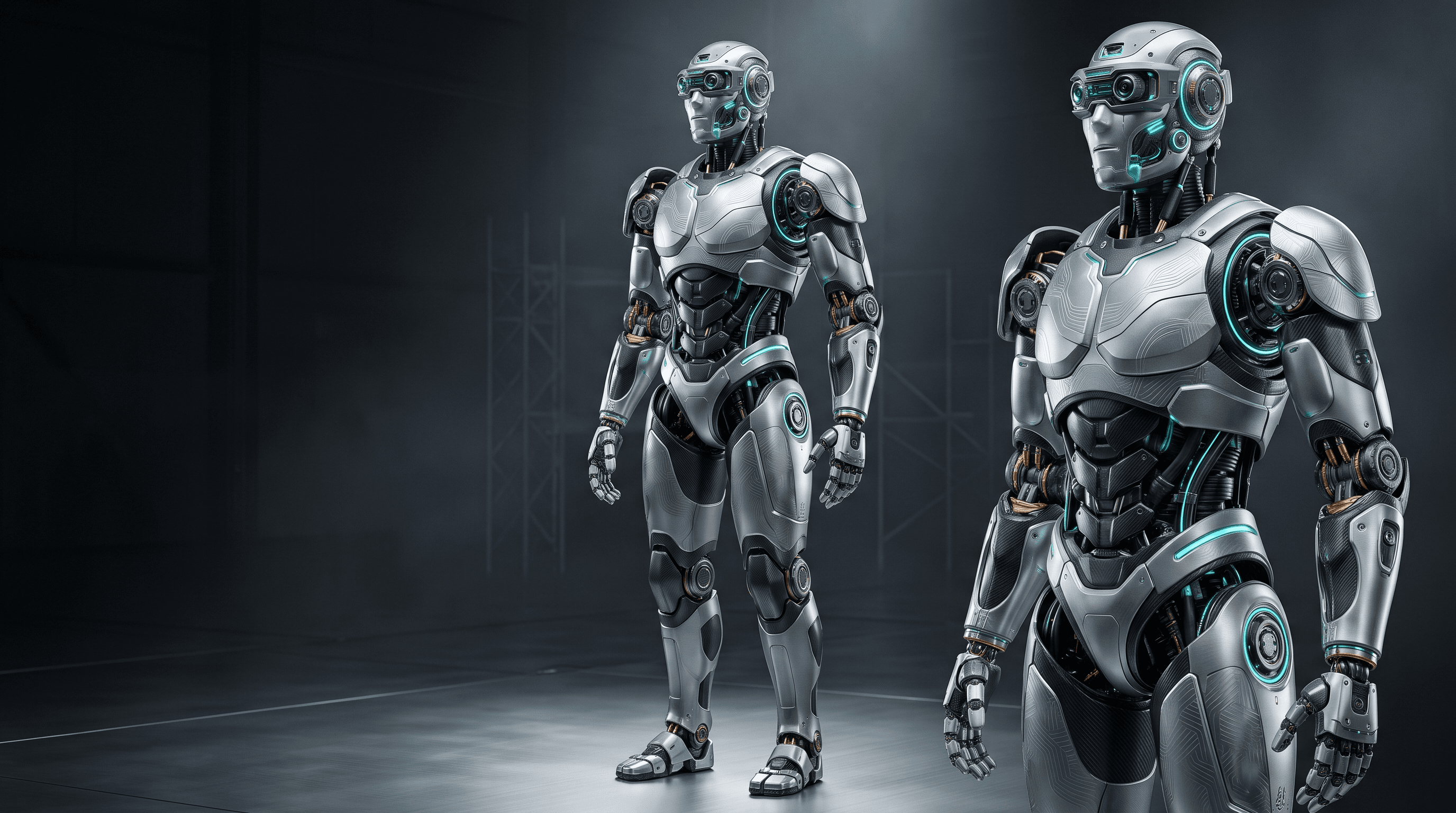
Humanoid robotics has become one of China's most visible high-technology industries. Companies are developing machines capable of walking, balancing, handling objects, and performing increasingly complex physical demonstrations.
However, commercial success requires more than impressive videos. Robots must become reliable, useful, maintainable, and economically competitive in actual workplaces.
Unitree Robotics: An Important Case Study
Unitree Robotics provides a particularly revealing example. The Chinese robotics manufacturer attracted enormous market attention following its public listing in August 2026.
Reuters reported in September that Unitree shares initially surged more than fivefold before declining approximately 55% from their peak. That volatility increased scrutiny of other humanoid robotics companies seeking public listings.
Chinese regulators reportedly became more cautious about robotics IPO applications, particularly where high valuations appeared dependent on uncertain or government-supported revenue. However, there was no verified blanket prohibition covering the entire sector.
Unitree's October 2026 Financial Results
The company's October 28 earnings report provided a useful reality check. Unitree reported:
- Third-quarter revenue: Approximately 665 million yuan, up around 70% year over year.
- Net profit attributable to shareholders: Approximately 112.7 million yuan, down 17.4%.
- Nine-month revenue: Approximately 1.82 billion yuan during the first nine months of 2026.
These figures demonstrate two important realities. First, Unitree is generating meaningful revenue, indicating that robotics is not merely an imaginary market. Second, rapidly growing revenue does not guarantee equally rapid profit growth, especially when development spending increases.
Unitree's results illustrate why investors are paying greater attention to commercialization and profitability.
Did the October Robot Show Cause the Crash?
A major robotics exhibition took place in Shenzhen from October 27 to October 29, 2026.
Known as ROBOTECH 2026, the Intelligent Robotics Expo brought attention to humanoid robots, industrial automation, specialized machines, core components, and practical robotics applications. According to the official event information, its focus included industrial, commercial-service, and specialized robotics environments.
The exhibition highlighted China's continued efforts to move advanced robots beyond laboratories and into real operational settings.
Was There a Direct Connection?
No credible evidence reviewed for this article establishes that the Shenzhen exhibition caused the $480 billion market-value decline.
Therefore, describing the event as the cause of a sudden $480 billion withdrawal would be misleading.
The more important connection is economic rather than chronological. China's robotics exhibitions demonstrate engineering progress, while financial markets increasingly question the future earnings potential of robotics and AI-related companies. Both developments can occur simultaneously.
A robot may perform impressively during a demonstration while its manufacturer's shares decline because investors expect lower profits than previously anticipated.
Can China's Robotics Industry Recover?
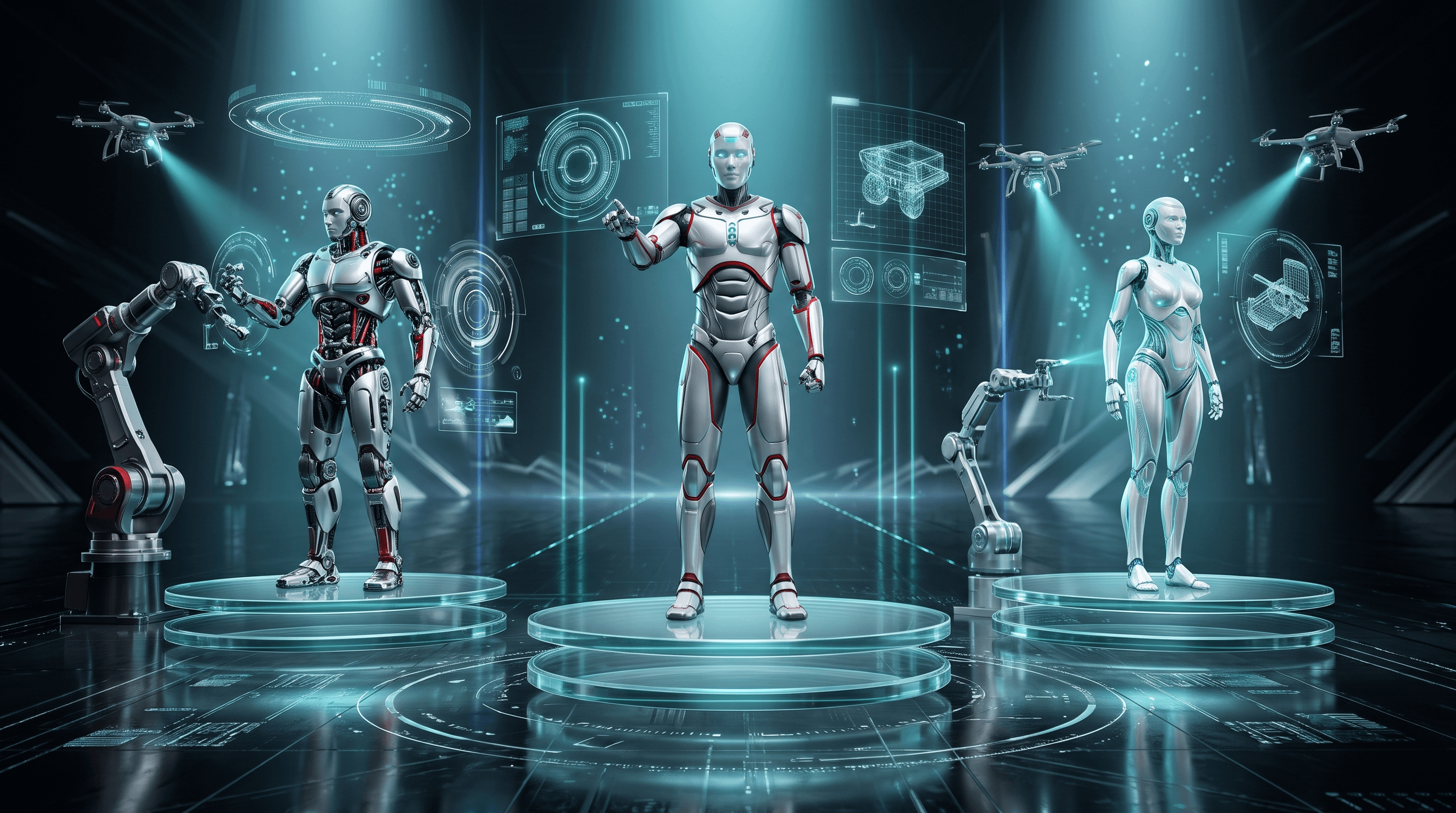
A stock-market correction does not necessarily mean an entire technological industry is failing. China maintains significant capabilities in electronics manufacturing, industrial automation, engineering, and robotics supply chains. Companies may continue improving their products even when stock prices decline.
However, a difficult funding environment can create consequences. Early-stage businesses may encounter stricter financing conditions. Publicly traded companies may face more demanding investors. Companies relying heavily on speculative valuations could find fundraising increasingly challenging.
At the same time, stronger businesses may benefit from an industry shift toward commercial discipline. Investors are likely to focus more closely on recurring customer orders, operating margins, deployment reliability, maintenance costs, and genuine productivity improvements.
For humanoid robots, the critical question is not simply whether a machine can dance or perform a dramatic demonstration. It is whether that machine can complete useful work consistently at an acceptable cost.
What Does This Mean for the Global AI Industry?
China's market correction offers an important lesson for the wider artificial intelligence industry. Technological innovation and financial returns are related, but they are not identical.
- AI businesses globally face intensifying pressure to demonstrate practical economic value.
- Infrastructure providers must prove that future demand will support massive capital expenditures.
- Robotics manufacturers must demonstrate real-world workplace applications beyond promotional videos—a trend underscored by Western industrial initiatives like NVIDIA and Agile Robots' Agile ONE SN platform.
- Adopting enterprises must evaluate productivity gains against substantial implementation and maintenance costs.
The Chinese selloff does not prove that AI is fundamentally overvalued everywhere, or that global AI adoption will decline. It does illustrate how quickly investor expectations can change when valuations move ahead of demonstrated profitability.
Frequently Asked Questions
Did China lose $480 billion overnight?
No. The reported figure represents an estimated reduction in market capitalization associated with a stock-market decline that unfolded over several months across the STAR 50 index.
Did China's humanoid robots fail?
No evidence establishes a universal technological failure. Individual companies face different engineering, commercial, and financial challenges, but physical mobility, balance, and mechanical research continue advancing.
Is Unitree Robotics still growing?
Unitree reported approximately 70% year-over-year revenue growth in the third quarter of 2026 (665 million yuan), although quarterly net profit declined 17.4% due to higher development spending.
Is China's AI bubble officially over?
There is no official determination that an entire industry's financial bubble has ended. Some analysts characterize the correction as a bubble bursting, while others view it as a necessary reassessment of elevated expectations.
Final Thoughts
China's estimated $480 billion AI stock-market decline represents a significant warning about the risks of speculative technology valuations. But it should not be confused with the end of Chinese robotics innovation.
The real story is the widening distinction between exciting demonstrations and sustainable commercial performance. China's robotics companies may continue developing advanced machines while investors demand stronger evidence of profitability.
For the global technology industry, the lesson is clear: the future of artificial intelligence will depend not only on what machines can demonstrate, but on the measurable value they deliver.
Editorial Integrity Note
This article is based on information and exchange disclosures available through October 30, 2026. Market figures are dated estimates reflecting reported point-in-time exchange records rather than permanent current values. AI SiteFlow updates statistics and citations if materially new verified information emerges.