
NVIDIA's New Humanoid Robot: The Factory AI Race Just Got Real
The Industrial Shift: From Digital Silicon to Physical Work
The race to deploy artificial intelligence is moving beyond server racks and browser chat windows onto the factory floor.
For the past three years, the generative AI boom has been defined by large language models, cloud data centers, and digital copilots. But global industrial leaders increasingly agree that the next massive frontier of artificial intelligence is Physical AI—intelligent models capable of sensing, understanding, and physically manipulating the real world.
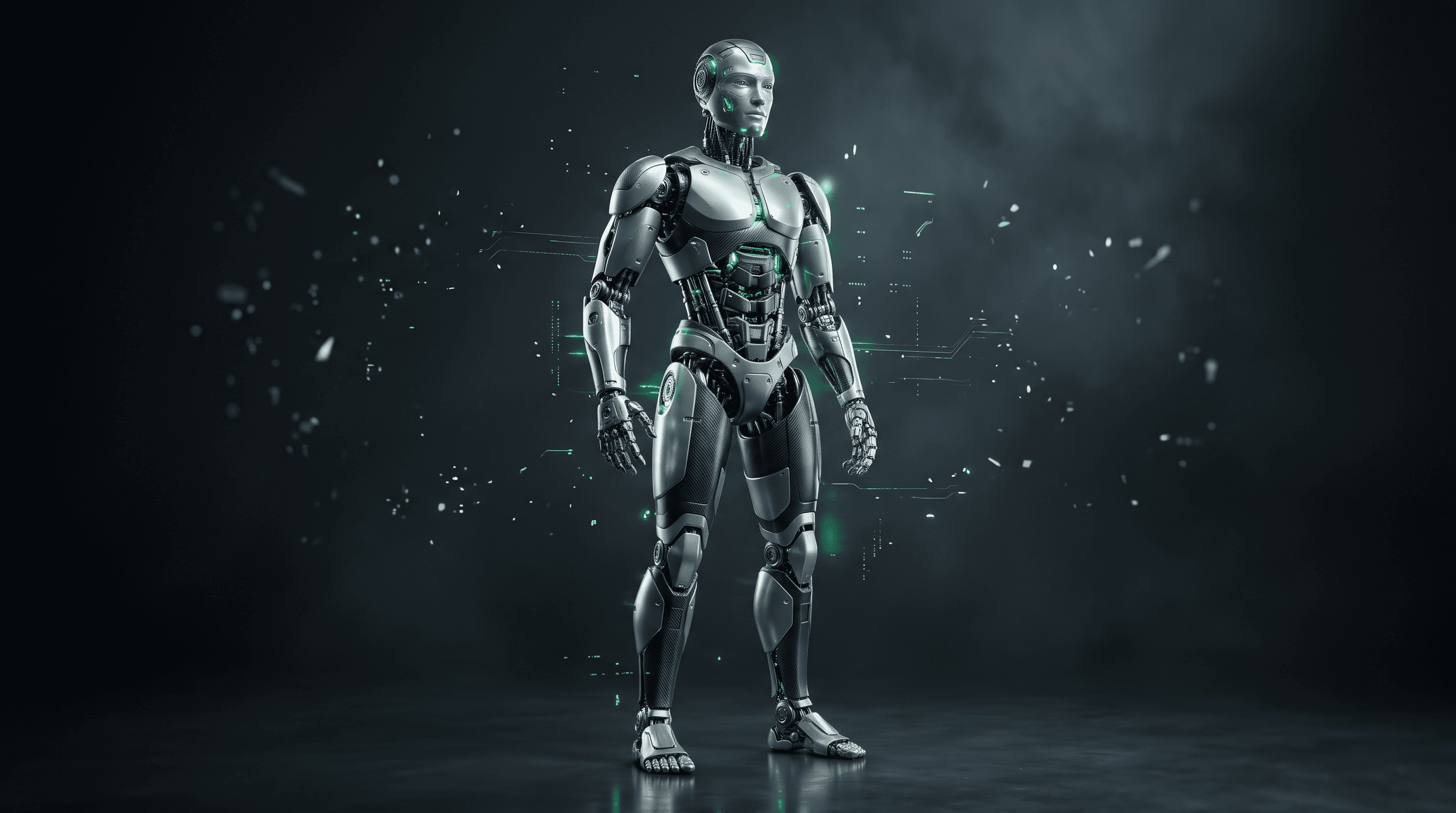
In late October 2026, that ambition took a major technological leap. NVIDIA and Munich-headquartered Agile Robots officially introduced Agile ONE SN, a groundbreaking humanoid research platform that integrates NVIDIA's high-performance Jetson Thor edge-compute architecture with its Isaac GR00T foundation software stack.
Coming right as global manufacturing hubs reckon with aging labor demographics and supply-chain re-shoring, this collaboration signals that the race for factory-capable humanoid robotics has transitioned from theoretical research into active prototyping.
What Happened?
On October 21, 2026, NVIDIA and Agile Robots formally unveiled the Agile ONE SN, an open humanoid research platform designed specifically to accelerate the development, simulation, and real-world deployment of general-purpose robots.
Rather than positioning the robot as an off-the-shelf consumer butler or a replacement worker ready for immediate purchase, both companies clearly framed Agile ONE SN as a standardized reference platform.
Bridging the Simulation-to-Reality Gap
Historically, robotics teams have faced a grueling bottleneck known as the “sim-to-real gap.” An AI model trained in a digital simulator often fails when loaded into physical hardware due to differences in motor latency, sensor noise, friction, and unexpected lighting conditions.
By combining NVIDIA's custom-built Jetson Thor system-on-a-chip (SoC) with the Isaac GR00T foundational model, Agile ONE SN gives robotics researchers a turnkey platform where simulated physics in NVIDIA Omniverse translate directly to real-world motor commands.
Its core objective is simple yet urgent: give academic institutes, automotive manufacturers, and logistics developers a unified hardware-software canvas to train physical AI on dexterous, repeatable industrial tasks.
Robot Features: Anatomy of Agile ONE SN
Agile ONE SN was deliberately designed with industrial proportions and precision manipulation in mind, avoiding oversized or cumbersome footprints that cannot navigate tight assembly aisles.
1.4-Meter Humanoid Stature
Standing at 1.4 meters (approximately 4 feet 7 inches), the robot is optimized for human-scale industrial environments, including conveyor belts, standard tool racks, and assembly benches, without posing the tipping hazards of heavier 1.8-meter constructs.
Tactile Five-Finger Hands
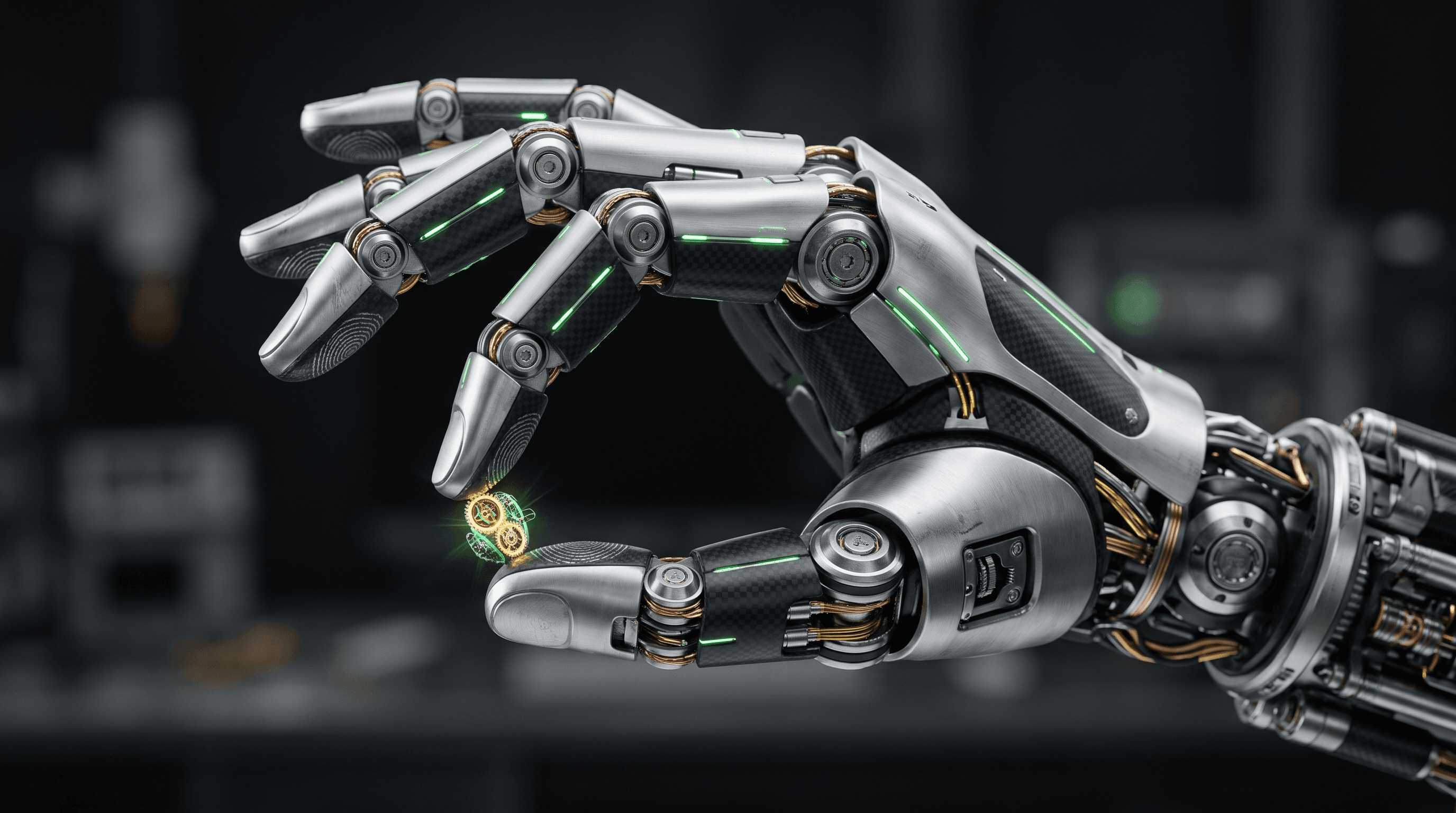
Equipped with fully articulated five-finger hands embedded with high-resolution tactile sensors. This allows the robot to handle delicate items, grasp varying container geometries, and manipulate standard hand tools.
Integrated Vision & Lidar Perception
The head unit and torso combine multi-spectrum stereo cameras with compact solid-state lidar. This dual-layer vision stack guarantees real-time 3D point cloud generation and millimetric depth sensing even in harsh lighting.
Jetson Thor & Isaac GR00T
Powered by NVIDIA Jetson Thor, built on the Blackwell GPU architecture, delivering up to 800 teraflops of 8-bit floating-point AI compute. It runs GR00T multimodal models directly on the robot with zero cloud latency.

2027 Launch: Production Plans vs. Reality
A crucial aspect of responsible technology journalism is clearly separating announced corporate roadmaps from finalized commercial deliveries.
Agile Robots' 2027 Manufacturing Ambition
Agile Robots has announced plans to make the Agile ONE SN available to select partners in early 2027. Following the launch event, a Reuters report detailed the company's ambition to manufacture between 1,000 and 2,000 units of the small humanoid robot during 2027.
It is vital to note that 1,000–2,000 units represent an internal production and tooling ambition, not confirmed customer purchases or finalized commercial deliveries. Pricing, final delivery tiers, and regional import certifications have not been disclosed.
As observed in our comprehensive review of China's $480 Billion AI Stock Crash and the Robotics Reality Check, capital markets have grown deeply skeptical of speculative production targets. Achieving stable unit economics and dependable quality control in physical robotics requires passing rigorous multi-month manufacturing stress tests.
Why It Matters: Physical AI vs. Industrial Bottlenecks
Could AI-driven humanoid robots transform factories and warehouses? Potentially, yes. But the timeline will be governed by engineering discipline rather than marketing excitement.
The Enormous Upside of Physical AI
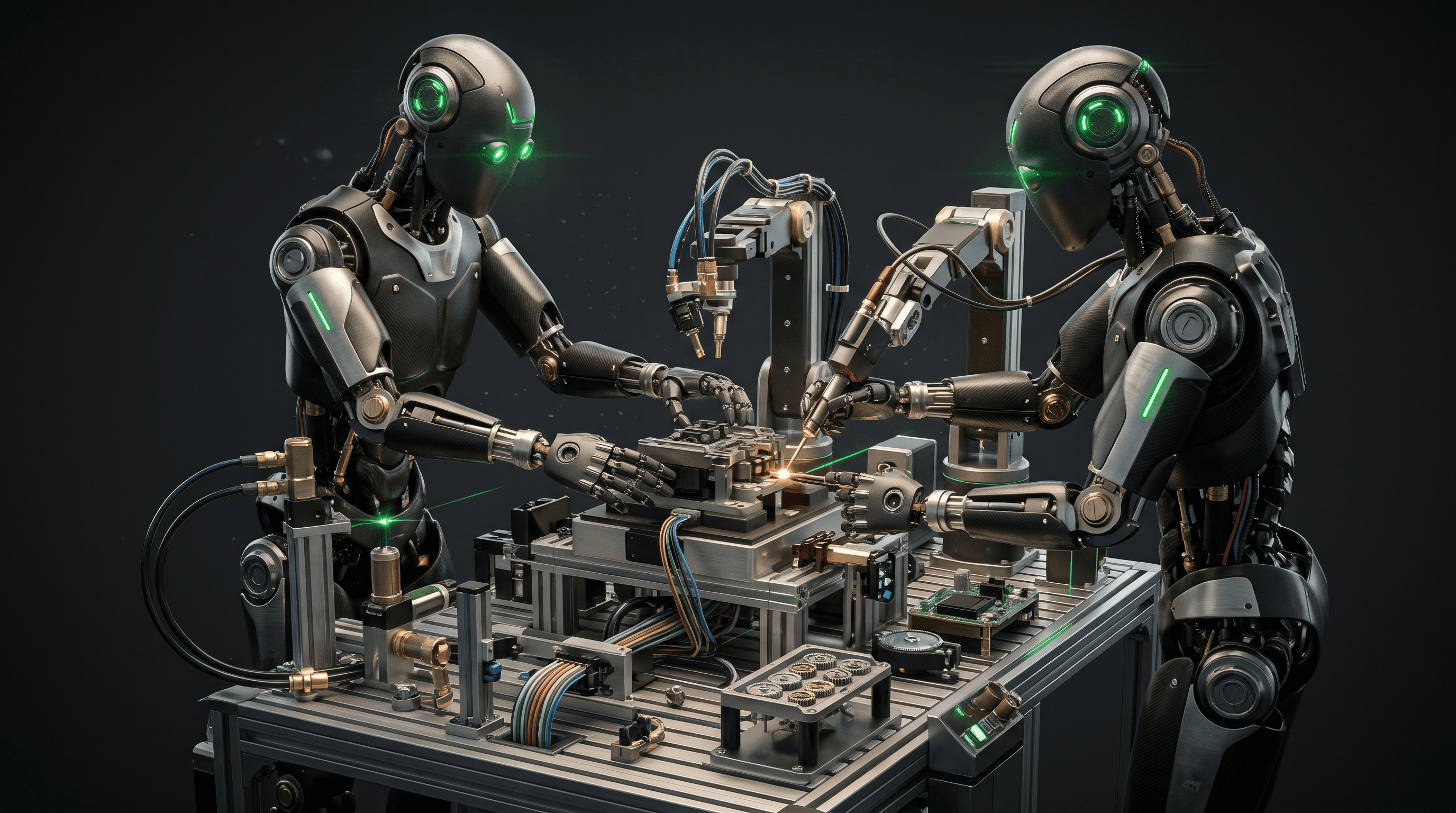
Conventional factory automation relies on fixed robotic arms bolted to floors behind safety cages. They excel at high-speed repetitive stamping, but reprogramming them for a new product line costs millions of dollars and months of downtime. A humanoid robot that can perceive its surroundings, adapt to varying part placements, and learn via synthetic simulation offers unprecedented flexibility.
The Formidable Obstacles Outside the Lab
- Safety Certifications: Uncaged robots operating alongside human workers must adhere to ISO 10218 and ISO/TS 15066 standards. A single erratic movement can halt an entire plant.
- Battery Endurance & Thermal Management: Running onboard Blackwell GPU teraflops alongside 30+ electric actuators generates extreme heat and drains battery packs in under two to four hours of continuous high-torque duty.
- Total Cost of Ownership (TCO): Actuator wear, cable replacement, gearbox backlash, and software maintenance mean purchasing the robot is only a fraction of the lifetime investment.
- Customer Demand & ROI: Enterprise procurement teams demand clear payback periods within 18–24 months before committing capital budgets.
The future of physical AI is visibly accelerating—but the ultimate test will not happen inside promotional video reels. It will happen on greasy factory floors under the scrutiny of production supervisors.
Frequently Asked Questions
Is NVIDIA selling a consumer humanoid robot?
No. NVIDIA is not selling a household butler robot. Agile ONE SN is an industrial research platform produced by Germany's Agile Robots, powered by NVIDIA Jetson Thor silicon and Isaac GR00T foundation software.
When can companies actually buy Agile ONE SN?
Agile Robots targets research availability in early 2027. Reuters reported an internal company goal of manufacturing 1,000–2,000 units in 2027, but formal pricing and customer order books have not yet opened.
Why are tactile five-finger hands so important?
Standard two-jaw industrial grippers can only grasp rigid, pre-defined shapes. Tactile five-finger hands allow robots to sense pressure distribution, pick up fragile components, and utilize everyday manual tools without custom retooling.
Will humanoid robots replace human factory workers anytime soon?
Not immediately. While progress is rapid, human workers still hold vast advantages in dexterity, problem-solving, situational reasoning, safety adaptability, and operating cost. The near-term trend is human-robot collaboration on hazardous or repetitive tasks.
Bring Next-Generation AI Technology to Your Brand
Whether you are an emerging robotics startup, an enterprise tech brand, or a high-growth industrial company, AI SiteFlow crafts bespoke Next.js web experiences and cinematic AI video commercials that captivate buyers and investors.
Related Technology Articles
View AllChina's $480 Billion AI Stock Crash: Why Robotics Hype Is Facing Reality
Explore the STAR 50 index contraction, Unitree Robotics financial metrics, and why exciting demos must lead to profitability.
ChatGPT Ads Expand to 89 Countries in 2026: What It Means for Brands
Discover how conversational advertising works, supported regions, privacy guardrails, and practical tips for global campaigns.
Editorial Integrity & Disclosure Note
This article distinguishes announced technology, planned availability, and production targets from verified commercial deployment. AI-generated visuals are included as conceptual editorial illustrations and must not be interpreted as authentic product photographs of the Agile ONE SN hardware. AI SiteFlow does not represent NVIDIA or Agile Robots.